EducationUSA App





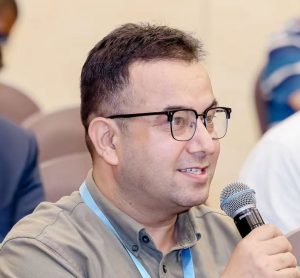
An environmental scientist and university educator, Dr. Binod Baniya has been teaching and conducting research at Tribhuvan University since 2011. His areas of expertise include eco-hydrology, drought, mountain flash floods, urban heat islands, forest-environment interactions, early warning systems, and remote sensing. Dr. Baniya completed his Ph.D. at the Institute of Geographic Sciences and Natural Resources Research of the Chinese Academy of Sciences as a CAS-TWAS President’s Fellow. He has authored more than three dozen scientific publications and mentors both master’s and doctoral researchers.
Dr. Baniya is spending his 2026–27 Fulbright Visiting Scholar award at Michigan State University’s Department of Civil and Environmental Engineering. There, he is building on his work on environmental and hydrological challenges while gaining exposure to new research methods and approaches. The collaboration will also strengthen connections with U.S. researchers and contribute to his continuing work in environmental research, teaching, and student mentorship in Nepal.

Dr. Sunita Sanjyal has been conducting research at the Nepal Agricultural Research Council (NARC) since 2010 and currently serves as a Senior Scientist specializing in pasture, forage, agroforestry, and animal nutrition. Her work is centered on developing improved forage crops and technologies that can lower feed costs and enhance livestock productivity across Nepal’s diverse ecological regions. She has contributed to the release of ten forage crop varieties and also teaches and mentors research students at Tribhuvan University. Dr. Sanjyal earned her Ph.D. from Lincoln University in Christchurch, New Zealand.
During her 2026–27 Fulbright Visiting Scholar program at New Mexico State University, Dr. Sanjyal is exploring ways to improve year-round forage production in areas with limited water availability. Her research looks at the relationship between soil health and forage production and examines how different cover crops affect sorghum silage yield and quality. She plans to draw on these findings to support more productive and sustainable forage and livestock systems in Nepal.
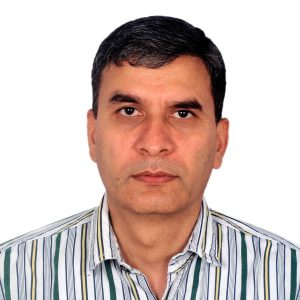
Dr. Namraj Dhami is an Associate Professor of Medicinal Botany at Pokhara University and a plant molecular biologist with more than 20 years of teaching and research experience. A former Executive Director of Research at Pokhara University, his research focuses on the molecular regulation of nutritionally and medicinally important compounds in crop and medicinal plants, particularly carotenoids. He earned his Ph.D. in Plant Cell and Molecular Biology from Western Sydney University and an MSc in Plant Biotechnology from Wageningen University.
As a 2026–27 Fulbright Visiting Scholar at Cornell University, Dr. Dhami is investigating the molecular mechanisms that regulate carotenoid production and accumulation in plants under different light and temperature conditions. His research could contribute to future efforts to develop crops and leafy vegetables enriched with provitamin A, with potential applications for improving nutrition in resource-limited communities. Through his Fulbright experience, he is also expanding international research partnerships and strengthening expertise in advanced plant molecular biology.