EducationUSA App





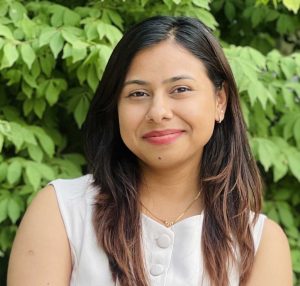
Ansu Adhikari is a Crop Development Officer at the Central Agricultural Laboratory under Nepal’s Ministry of Agriculture and Livestock Development. With over three years of experience in the field of agronomy, with a specific focus on seed sector, she specializes in seed quality assurance, testing, and analysis. Her work supports the development of resilient and productive farming systems, especially through strengthening seed systems. In addition to her technical responsibilities, she has served as an agricultural instructor, where she taught high school students and promoted agricultural literacy at the grassroot level. As a Fulbright grantee, she is pusruing a Master of Science in Crop Science at Washington State University. Her academic interests lie in sustainable crop production, climate-smart agriculture, and building sustainable seed systems for developing countries. Driven by a vision to enhance Nepal’s agricultural resilience, she aspires to transform the nation’s seed system into one that is more robust, equitable, and sustainable. Beyond her professional work, she finds joy in reading, travelling and photography.
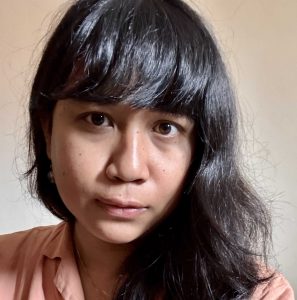
Dia Yonzon is a writer and Fulbright awardee in Creative Writing, with a focus on fiction. She received her diploma in Writing and Research from the Open Institute for Social Science, where she was also a writing fellow. She is the founder of The Melung Stories. Her work has appeared in literary magazines like La.Lit, Catflap, and in South Asian anthologies published by HarperCollins and Penguin Random House. In 2023, her short story Unwritten Letters was awarded third place in the Writing Nepal: A Short Story Contest. Through the Fulbright program, Dia is pursuing a Master of Fine Arts (MFA) in Creative Writing at San José State University in California, where she continues to explore stories rooted in memory, place, love, and identity.
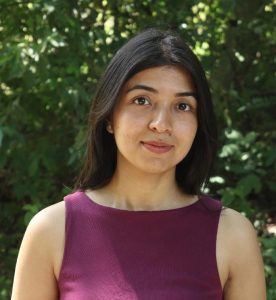
Kartika Yadav is a government official with nine years of experience in Nepal’s civil service. She spent almost eight years as a Planning Officer at the National Planning Commission, the apex policymaking advisory body of the government, where she worked extensively in drafting and formulating the 15th and 16th national development plans, in localizing the Sustainable Development Goals, in preparing a smooth transition strategy for the country’s graduation from LDC status, and coordinating international affairs with the Ministry of Foreign Affairs and development partners. She has also worked for a rural municipality, and recently shifted to the Department of Commerce, Supplies and Consumer Protection, where she oversees Nepal’s E-Commerce regulation. As a Fulbright grantee, she is pursuing a Master of Public Administration at the School of International and Public Affairs at Columbia University in the City of New York. She is particularly interested in studying urban and social policy, as well as development practice.
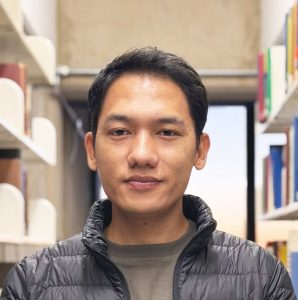
Suraj Lama is an architect dedicated to creating sustainable built environments. After the 2015 Gorkha Earthquake, he traveled across various regions of Nepal, documenting vernacular design and construction techniques. His research has also taken him to high mountain areas where he studied the adaptive practices of Transhumant Pastoralist communities in Rasuwa facing disaster and environmental challenges. Professionally, he has focused on sustainable, community-centered design at Prabal Thapa Architects, contributing to projects across Nepal, including the Kopila Valley Children’s Home in Surkhet and the Nagarik Aawaz Center for Peace and Reconciliation in Nawalpur, fostering resilience and social healing. He also has contributed to post-earthquake heritage conservation efforts, working with ICOMOS, the Department of Archaeology, DUDBC, and Palungtar Municipality in Gorkha on the documentation and preservation of vernacular and historic architecture. As a Fulbright grantee, he is pursuing a Master of Architecture at the Rhode Island School of Design. He aims to integrate indigenous knowledge with contemporary sustainable practices to address broader socio-economic and environmental challenges.